Most guests arrive at Rakkh with a version of the resort already assembled in their heads — the cottage, the views, the pool, the meals. They’ve seen the photographs. They know what the property looks like from the website. What they don’t quite expect is what happens the moment they step off the grounds and into the landscape surrounding it.
Five minutes on foot from the resort, the picture changes completely.
What Five Minutes Actually Covers
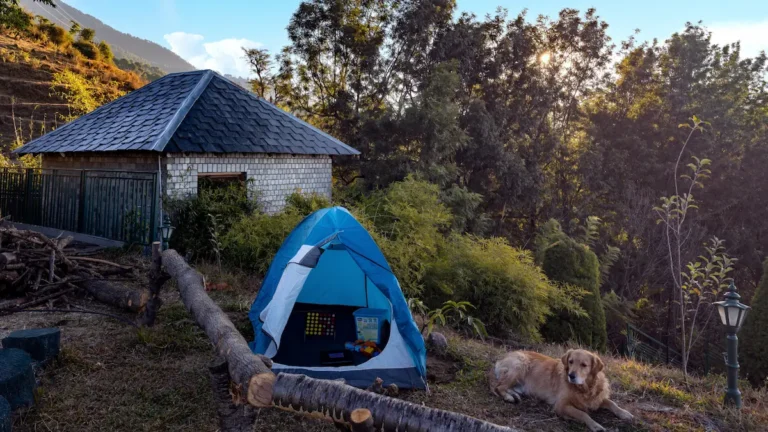
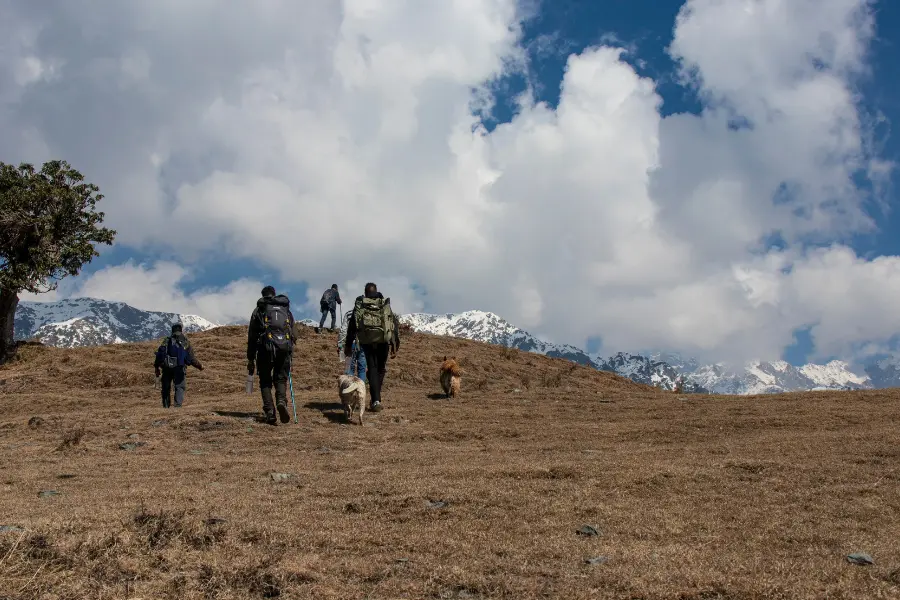
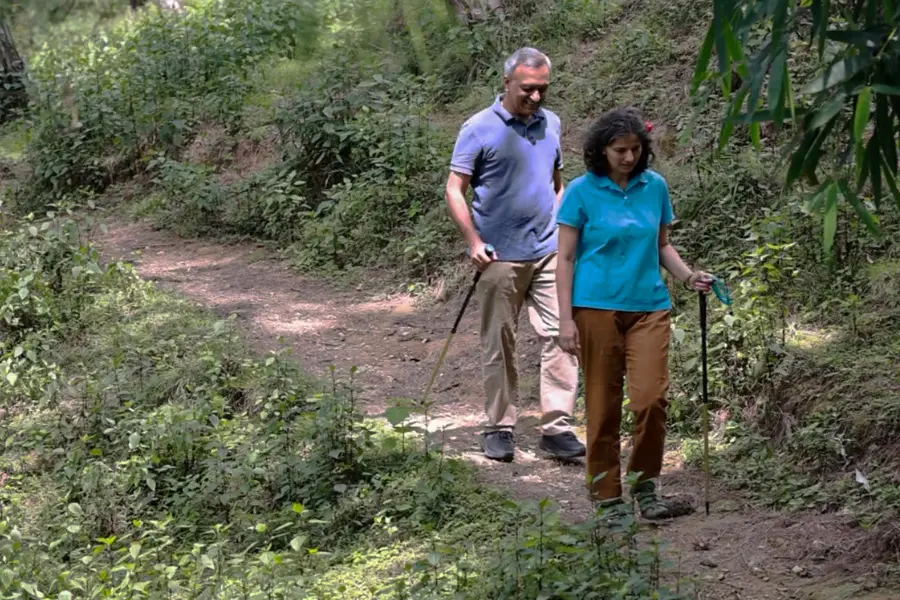
The trails at Rakkh don’t begin at a reception desk or a trailhead map pinned to a noticeboard. They begin at your cottage door — a detail that sounds small until you’re actually standing in the forest before 7am, listening to jungle fowl somewhere in the pine canopy above, wondering how you managed to get this far from the resort without a single manufactured moment.
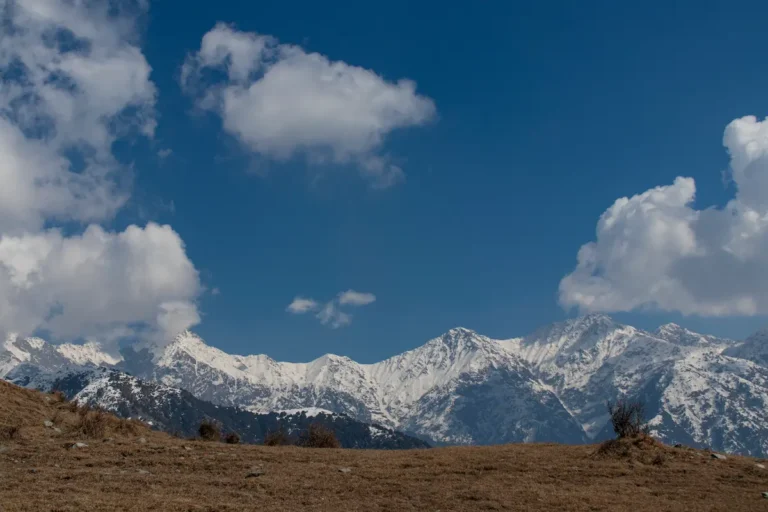
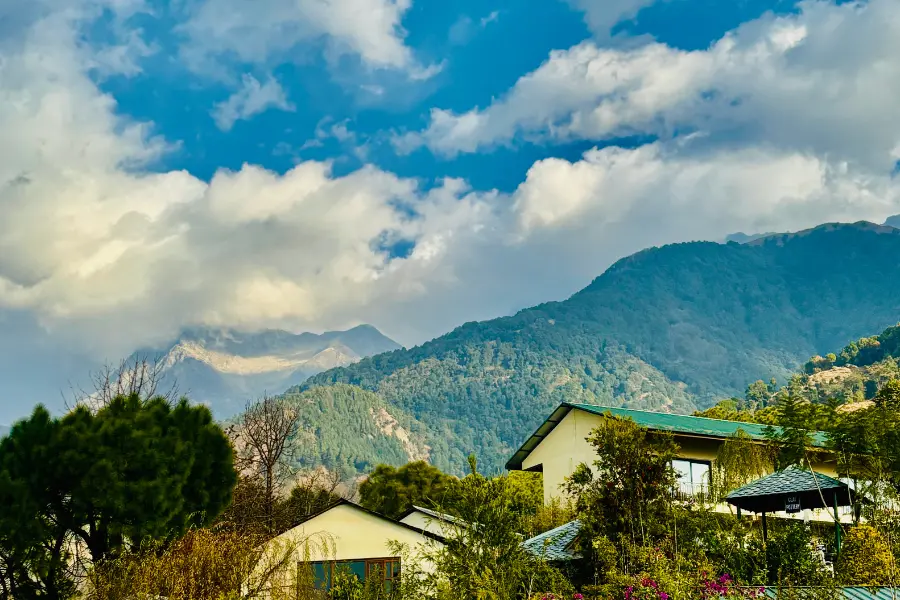
The route toward Rakh village takes guests through dense pine forest almost immediately — the kind that filters light in a way a photograph rarely captures accurately, where the temperature drops a few degrees and the sounds of the resort fade faster than expected. Along this stretch, if the morning is quiet enough and the timing is right, the Himani Chamunda temple and the Dhauladhar range open up in the distance — not as a staged viewpoint with a railing and a sign, but simply as what appears when the trees thin out and you happen to be looking in the right direction.
Why the Walk Changes the Resort
Here is what actually shifts when a guest takes this walk: their sense of where Rakkh sits in the landscape.
From inside the resort, it’s easy to feel like the mountains are a backdrop — beautiful, present, but somehow at a distance. Framed through a cottage window or viewed from the pool, the Dhauladhar range is spectacular but still separate, the way a painting on a wall is separate from the room. The walk removes that distance. Suddenly the resort isn’t in front of the mountains. It’s inside them — tucked into the same land that carries the pine forest, the Gadh temple, the small farms near Bhagotla village, the stream whose sound you hear before you see it.
This is the perspective shift that no amount of cottage design or pool positioning can manufacture. It has to be walked into. And it takes approximately five minutes to arrive.
The Khadd and What It Teaches About Rakkh’s Pace
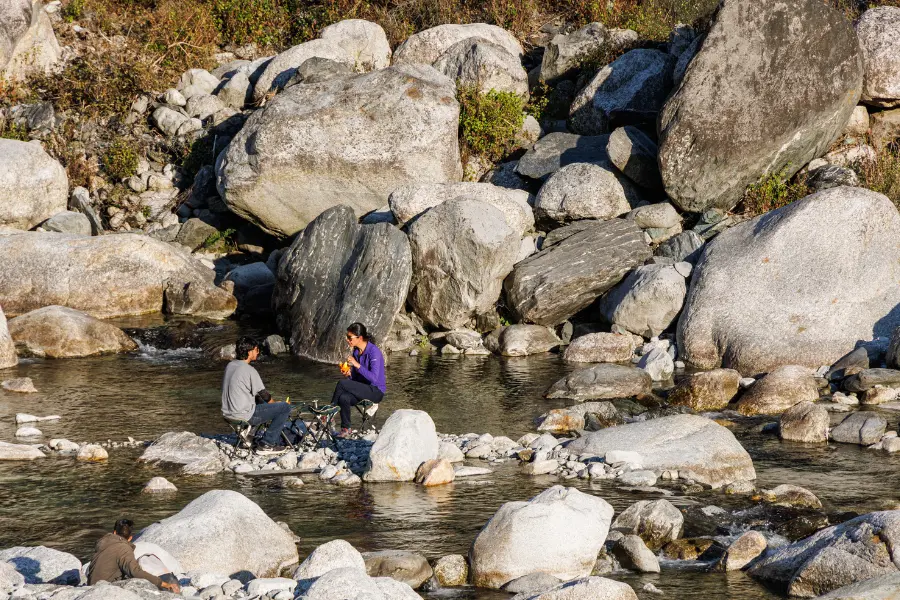
Further along the Bhagotla route — a trail that begins with paths through farms before transitioning into a hike through eucalyptus trees — guests reach the Khadd, a natural mountain stream with a pool wide enough to swim in during summer. The trail ends here, not at a gift shop or a rest stop but simply at the water, where the only thing to do is sit with it for a while.
This is, in miniature, exactly how Rakkh operates as one of the best resorts in Himachal Pradesh. The experience doesn’t end with a flourish or a curated finale. It quietly delivers you somewhere worth being and lets you decide what to do with it. The walk back covers the same ground — past the clearing where local villagers play cricket, through the eucalyptus stand, back toward the resort — but it feels different on the return. The landscape has become familiar in the way that only happens when you’ve moved through something on foot, slowly enough to let it register.
What Guests Actually Take Home
The photographs from a stay at one of the best resorts in Himachal Pradesh are almost always of the obvious things — the cottage, the pool, the mountain view from the deck. Rarely the walk. Rarely the moment the trees opened up and the Dhauladhars appeared without warning. Rarely the sound of the Khadd before the source was visible.
These are the things that don’t photograph easily. They’re also, almost always, the things guests mention when they describe what the stay was actually like. Five minutes from the cottage door. Worth every step.
Ready to take the walk for yourself? Explore what awaits beyond the cottage door at Rakkh, one of the best resorts in Himachal Pradesh.