Ask most resorts what luxury means, and you’ll get a familiar answer. Imported furnishings. A longer amenities list than the last property. Staff trained to anticipate requests before they’re spoken. None of that is wrong, exactly. But it’s a definition built for places that don’t have much else to offer – so they compensate by adding.
Rakkh, widely regarded as one of the best resorts in Himachal Pradesh, works from a different starting point. Here, the landscape isn’t a backdrop for luxury. It is the luxury, doing half the work before a single amenity comes into play.
When the View Isn’t Decoration
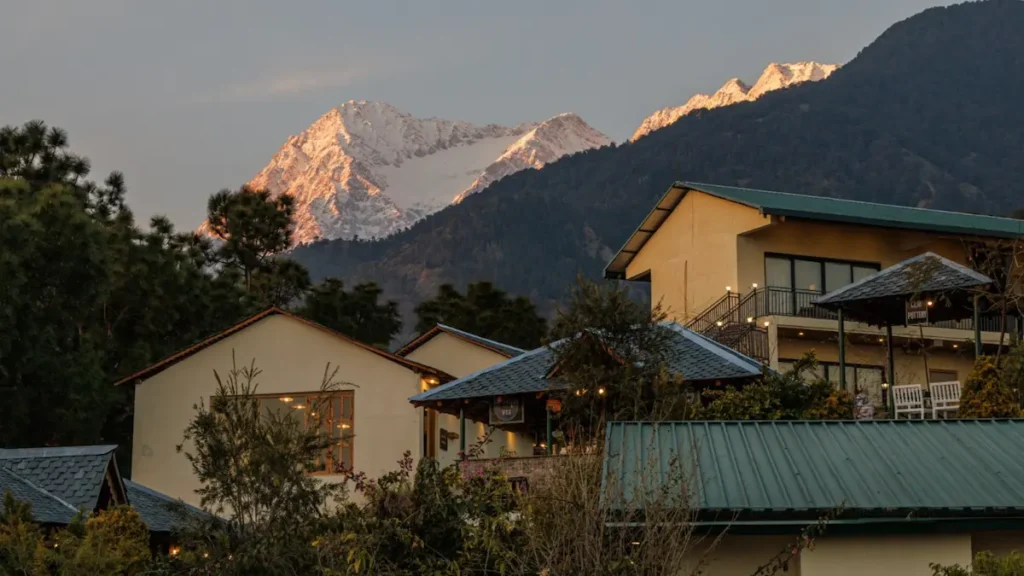
Most properties treat a good view as a bonus – something to mention in the brochure, a backdrop for a photo, a line item that justifies a higher room category. At Rakkh, the view isn’t decorating the experience. It’s structuring it.
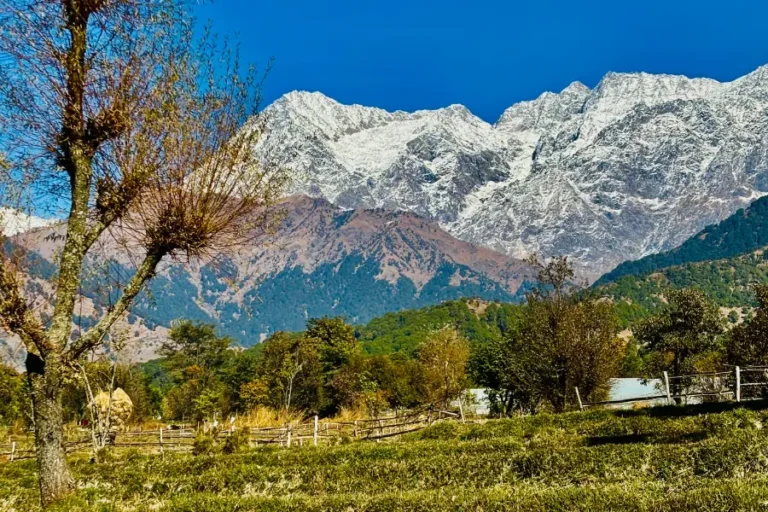
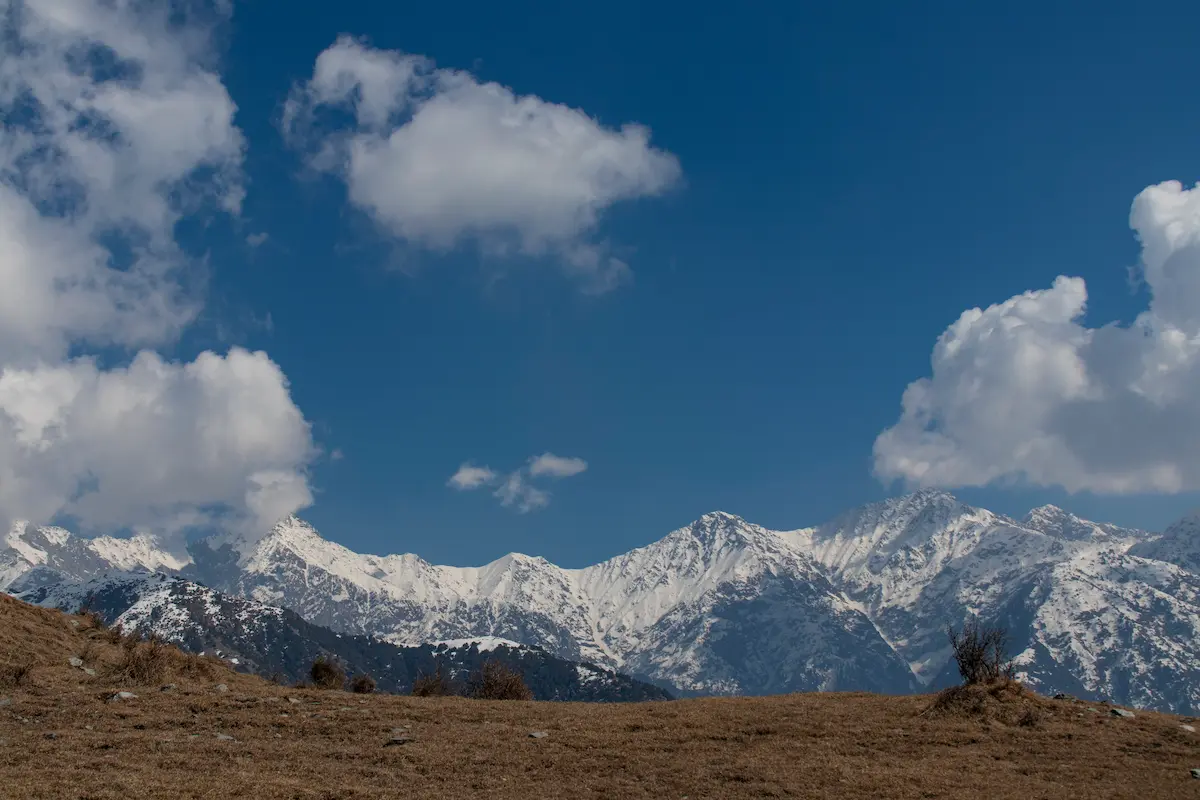
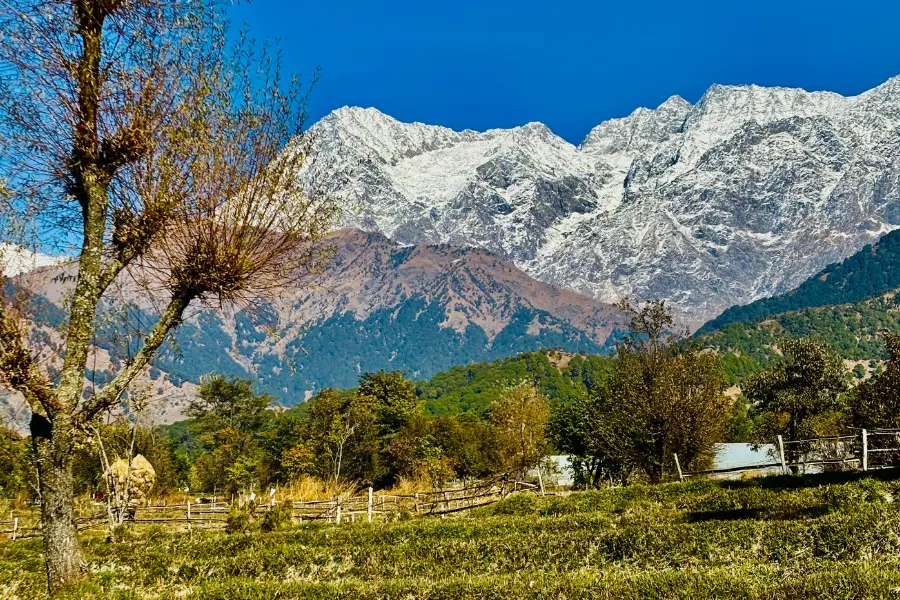
A guest doesn’t have to seek out the mountains here. They’re simply present – from the cottage window, from the infinity pool, from a walking trail that begins a few steps from the room. The Dhauladhars don’t need an introduction or a guided viewpoint. They’re just there, the way they’ve always been, doing more for a guest’s sense of calm than any spa treatment could.
This is the quiet advantage of building in the right place rather than building the most. Luxury, in this sense, isn’t added on top of the land. It’s borrowed from it.

What Effort Actually Buys
There’s a version of luxury that requires constant effort to sustain – polishing, restocking, upgrading, replacing. It’s impressive, but it’s also fragile; take away the staff and the upkeep, and the experience collapses quickly.
A mountain range doesn’t need maintaining. It doesn’t depreciate, go out of style, or need a renovation budget. When a resort is positioned so that its single biggest asset is something nature provides for free, every rupee spent elsewhere goes further – into food, into hospitality, into the small human touches that actually shape how a stay feels.
This is part of why Rakkh continues to be named among the best resorts in Himachal Pradesh, season after season. The location isn’t an accident of geography. It’s the foundation everything else is built on top of.
The Other Half of the Work
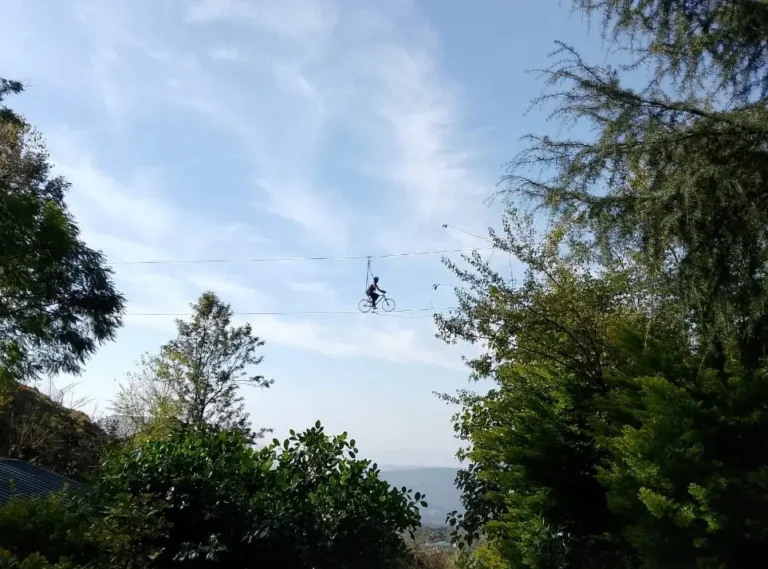
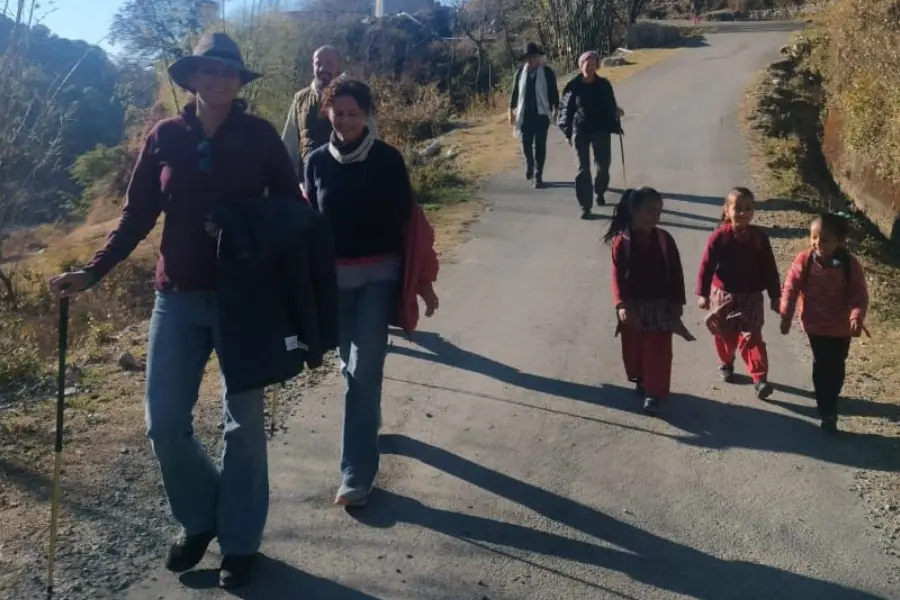
If the view does half the work, the other half still matters enormously – and this is where Rakkh chooses to invest. Locally sourced meals cooked the way they’ve been cooked in the hills for generations. Hospitality that’s offered quietly, without ceremony, the way the resort’s own philosophy describes it. Activities that don’t feel scheduled onto a guest’s day, but woven into the rhythm of it – a trek before breakfast, pottery in the afternoon, a slow evening by the fire.
None of this works without the view. But the view alone wouldn’t be enough either. Luxury, here, is the meeting point of both: a setting nature has already perfected, met by people who know not to get in its way.
Why This Matters for How You Choose a Stay
The next time “luxury resort” appears in a search, it’s worth asking a simple question: is the luxury something the property built, or something it was lucky enough to be built upon? At Rakkh, the answer is both – but only one half of that equation can be replicated elsewhere. The mountains can’t be added to another resort’s brochure. They can only be lived in, slowly, the way Rakkh intends every guest to.
Looking for one of the best resorts in Himachal Pradesh, where the view is part of the architecture, not just the photograph? Discover Rakkh.