The Difference Between Visiting Dharamshala and Actually Arriving
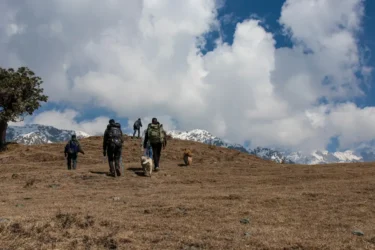
IMAGE 1 (Hero): A solitary guest standing at a viewpoint, looking out at Dharamshala’s valley and mountains — back to camera, unhurried, no phone in hand. The sense of stillness and genuine presence should read clearly. Place directly below the title, before the first paragraph. Suggested alt text: "Traveller pausing at a viewpoint in Dharamshala — arriving, not just visiting."
Most people who come to Dharamshala visit it. They arrive, photograph it, move through it, and leave carrying a version of the place assembled from the checklist: the Tibetan quarter done, the monastery seen, the café on the main road tried, the mountain photographed from the roof of a hotel. It’s a perfectly legitimate way to travel. It’s also a way of remaining, somehow, on the outside of a place the entire time you’re standing in it.
Arriving is different. Arriving is when the place stops being a destination and starts being somewhere you actually are. It’s quieter than visiting, and it tends to happen later — not at the moment the taxi pulls in, but somewhere after the pace has slowed enough that the surroundings stop being scenery and start being real.
The distinction matters because Dharamshala, more than most places, has two versions of itself. There’s the one you consume from a distance — cafes, monks, mountains, the photogenic stretch of McLeod Ganj at golden hour. And there’s the one you only encounter if you stay long enough, and slowly enough, to let it find you.
IMAGE 2: A narrow street or quiet lane in the Dharamshala area — a local vendor, a monk walking past, morning light, no tourists in frame. The image should feel lived-in rather than curated. Place here, after the third paragraph, before the first subheading. Suggested alt text: "A quiet morning lane near Dharamshala — the version of the place most visitors never see."
The Itinerary Problem
The trouble with most Dharamshala trips is that they’re built the wrong way around. The itinerary comes first — what to see, in what order, how many hours each thing takes. The place itself comes second, filled in around the schedule like background colour. The result is a trip that ticks every box and leaves the traveller faintly unsatisfied in a way they can’t quite name.
What gets lost in this approach is time — not time for more activities, but time that belongs to nothing in particular. The morning that begins with no plan and finds its own shape. The walk that doesn’t go anywhere specific. The hour spent sitting somewhere simply because the light happens to be falling in a way worth sitting in. These aren’t wasted hours. They’re the hours in which a place becomes somewhere you actually know rather than somewhere you’ve photographed.
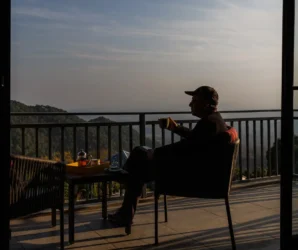
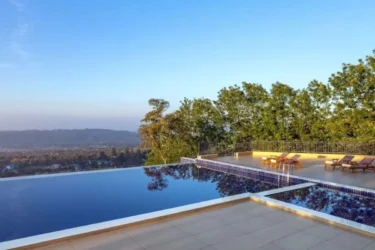
IMAGE 3: A guest sitting at a cottage deck or outdoors with a cup of tea, no phone, looking at the landscape — morning light, unhurried. No activity, no pose. Place here, after this paragraph, before the next subheading. Suggested alt text: "Guest enjoying a slow morning at Rakkh, the best resort in Dharamshala — no itinerary, just presence."
What Rakkh Understands About This
The reason Rakkh continues to be named among the best resorts in Dharamshala is not purely about facilities, though those are carefully considered. It’s about a design philosophy that begins with a different question than most resorts ask. Not: what can we offer guests to keep them busy? But: what does this particular landscape ask of the people who come to it?
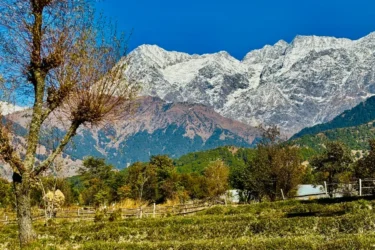
The Kangra Valley asks for slowness. The Dhauladhar range, which sits at the edge of every view from the property, asks to be looked at without distraction. The pine forest that begins at the cottage door asks to be walked into before the day has fully begun. None of these things fit onto an itinerary. They require the kind of time that only becomes available when the schedule has been deliberately kept light.
This is how Rakkh structures a stay. Not by filling every hour, but by creating the conditions in which unhurried time becomes possible — a morning with no fixed agenda, an afternoon that moves at whatever pace the guest sets, an evening by the fire that ends when it ends rather than when the programme says it should.
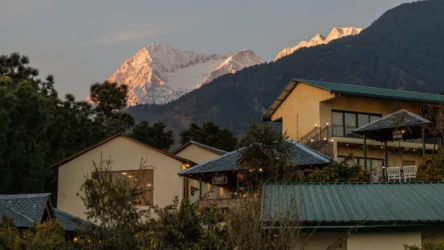
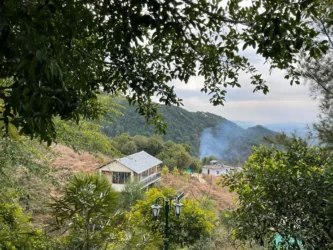
IMAGE 4: Dusk or golden hour shot of the Dhauladhar range from the resort grounds — wide, unhurried framing, no guests or resort infrastructure foregrounded. Let the landscape be the subject. Place here, after this paragraph, before the final subheading. Suggested alt text: "Dhauladhar range at golden hour from Rakkh Resort — the view that asks to be looked at."
The Moment You Actually Arrive
It’s different for every guest, and it’s almost never the moment of check-in. Sometimes it’s the second morning, when the rhythm of the place has started to feel familiar and the mountains look different because you’ve now looked at them long enough to notice that they do. Sometimes it’s during the Himachali Rasoi, when a meal cooked the way meals have been cooked in these hills for generations makes the region suddenly feel less like a backdrop and more like a context. Sometimes it’s on a forest trail, when the resort’s sounds have faded and the walk has become something that belongs entirely to the landscape rather than to a guest experience.
But it always happens eventually. And when it does, the place stops being Dharamshala-the-destination and becomes somewhere you were actually present for. That’s the difference between visiting and arriving. And it’s the experience that the best resort in Dharamshala is quietly designed to make possible.
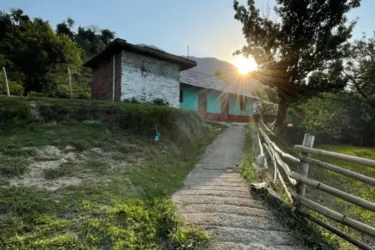
IMAGE 5 (Closing): A guest on their final morning — looking back at the cottage or out at the valley from a trail, a sense of quiet attachment to the place rather than readiness to leave. Back to camera, candid. Place at the very end of the blog, just before the CTA. Suggested alt text: "A guest’s last morning at Rakkh, the best resort in Dharamshala — the feeling of having actually arrived."
Ready to arrive, not just visit? Discover what Dharamshala feels like at the pace it deserves. Explore Rakkh.