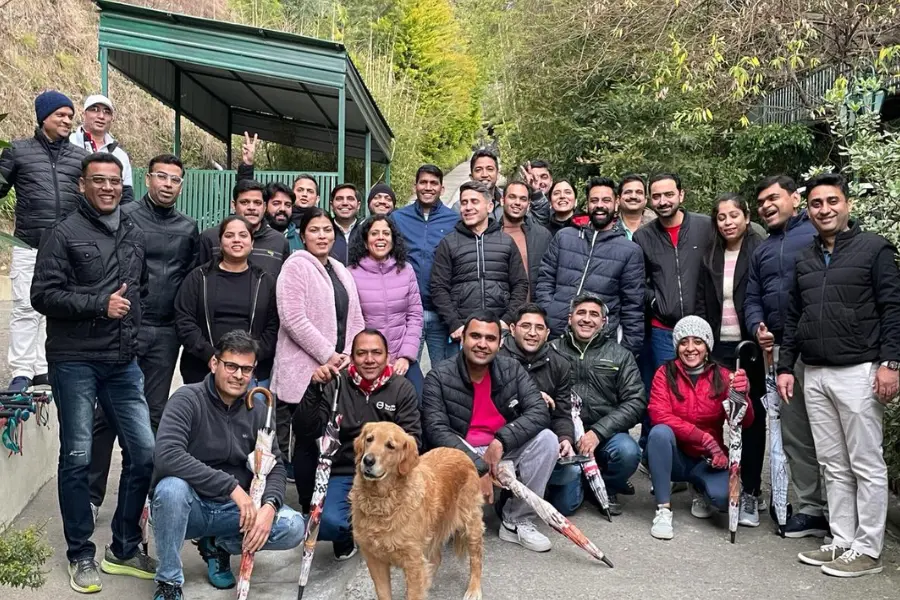
There is a specific moment that happens on most corporate retreats – usually somewhere between the first trail and the first meal that nobody scheduled. The person who sat quietly through three strategy sessions says something unexpectedly sharp. The manager who ran the morning meeting like a timed race slows down on a slope and waits for the rest of the group without being asked. Two colleagues who have exchanged exactly twelve sentences in two years of working together find, on a forty-minute walk with nowhere to be, that they have a great deal to talk about.
None of this was on the agenda. All of it matters more than most of what was.
The shift that happens when a team moves from a conference room to a mountain trail is not a soft, hard-to-measure thing. It’s observable, specific, and it begins almost immediately. Understanding what actually changes – and why – is the most useful argument for why outdoor corporate retreats work differently from their indoor counterparts, and why the setting of a corporate retreat matters far more than most planning conversations acknowledge.
The Conference Room Is a Performance Space
Conference rooms are designed to signal that work is happening. The oval table, the chairs arranged to face the presenter, the projector screen at one end – every element of the physical environment tells the people inside it who is supposed to speak, in what direction, and for how long. This is useful when a specific kind of output is required. It is actively counterproductive when the goal is the kind of honest, exploratory, non-hierarchical conversation that most retreats are actually trying to produce.
People in conference rooms perform. They hold their posture differently, moderate their language more carefully, stay closer to their designated role – senior person with senior opinions, junior person with cautious ones. The architecture of the room reinforces the architecture of the organisation, and both of them conspire against the kind of conversation a corporate retreat is supposed to enable.
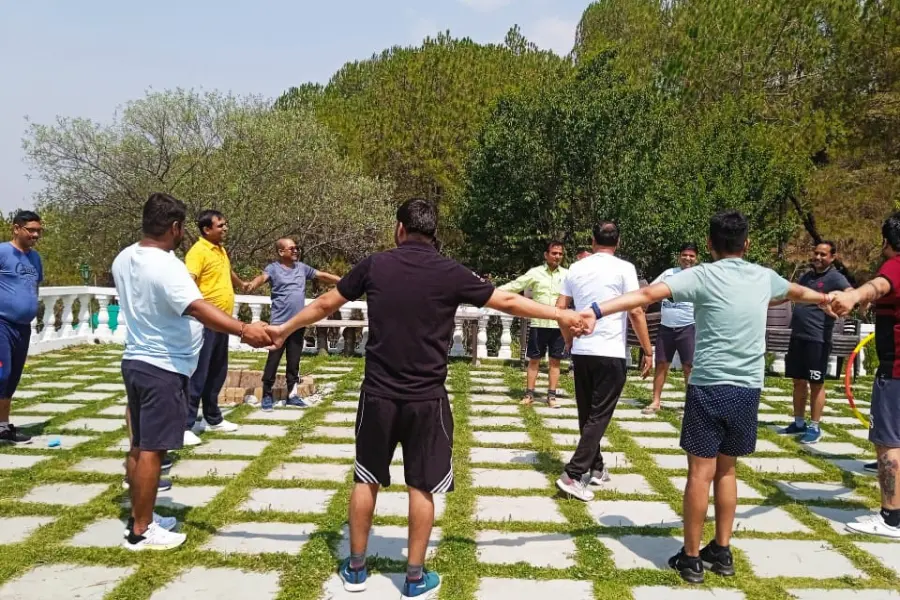
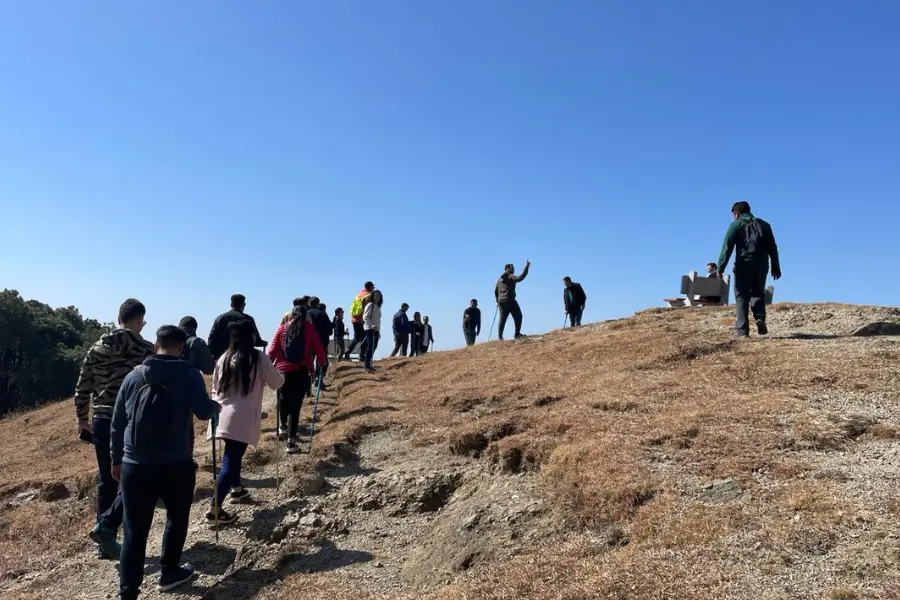
Take the same people outside. Put them on a trail with a gradient and a view, with no seating arrangement and no one standing at a screen, and the performance has nowhere to land. The conversation becomes different because the room – or rather the absence of one – stops cueing the behaviour.
What the Body Knows Before the Mind Does
Walking alongside someone, rather than sitting across from them, changes the nature of the conversation in a way that feels almost too simple to be true. The absence of eye contact – both people facing forward, watching the trail – removes one of the primary social pressures of a direct conversation. Things get said on walks that don’t get said in meetings. Not because the people are different, but because the physical dynamic is.
Altitude and open air do something else. They reduce the low-grade cognitive load that office environments accumulate across a day – the noise, the notifications, the proximity of unread emails and unresolved tasks. Research in environmental psychology consistently shows that natural settings lower cortisol, increase working memory capacity, and improve the ability to think laterally. This isn’t the reason to host a corporate retreat in the mountains, but it is what makes the conversations better when you do.
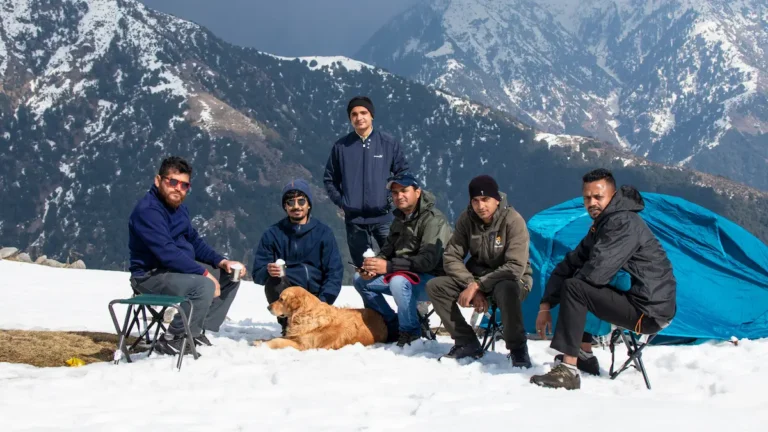
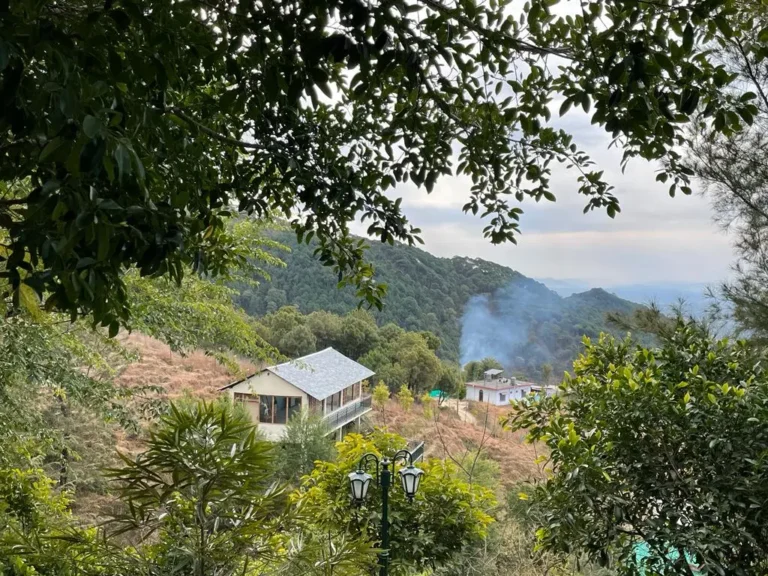
At Rakkh, these conditions are present from the moment the team arrives. The trails begin at the cottage door. The Dhauladhar range is at eye level from the meadow where outdoor sessions can be held. The pace of the property itself – unhurried, unscheduled in the right places – matches what the team actually needs rather than what a tightly packed programme would impose.
What Teams Bring Back That They Didn’t Have Before
The output of a well-designed corporate retreat in Himachal Pradesh isn’t a completed strategy document or a filled whiteboard – though those can happen too. It’s a set of relationships that are slightly more honest, slightly less defined by job title, and slightly more willing to have the difficult conversation rather than avoid it. These don’t sound like measurable business outcomes. They are, in fact, among the most significant ones available.
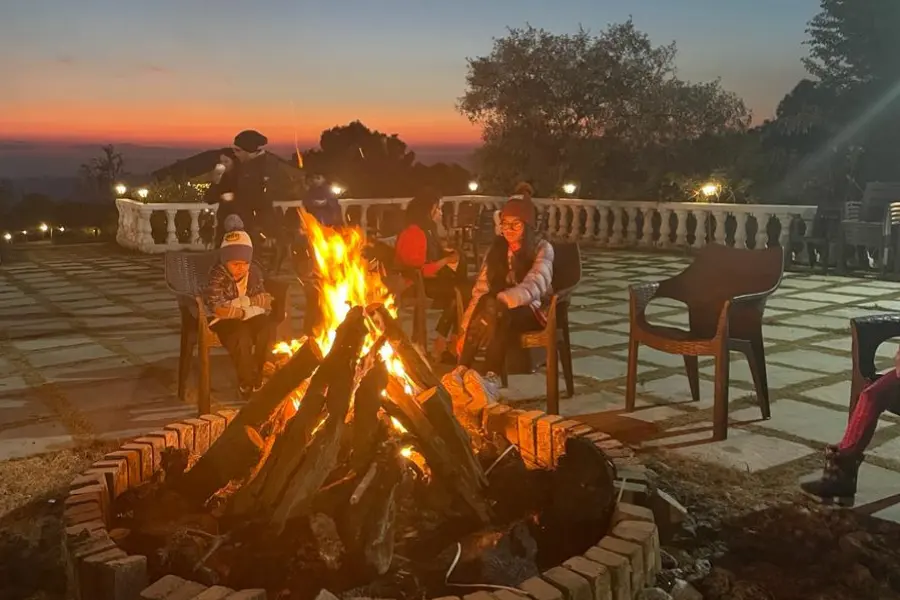
When the person who runs the morning meeting has spent a day walking and eating and sitting in open air with the people they manage, they go back to the morning meeting having seen those people differently. The conversation in the room is different because the walk happened first. The conference room doesn’t disappear. But the mountain trail changes what people bring to it.
That’s what corporate retreats at Rakkh are designed to produce – not a break from work, but a change in the quality of the people who return to it.
Planning a corporate retreat that changes how your team works, not just where they work for a few days? Discover Rakkh at https://rakkh.com/corporate-retreat/