When most people plan a Himachal Pradesh holiday, the shortlist assembles itself automatically. Shimla for the colonial charm, Manali for the snow and the parties, Kasol for the backpackers, Spiti for the serious trekkers. These are fine destinations, some of them genuinely extraordinary. But they share a quality that Palampur specifically does not: they’re crowded with people who are there for the same version of the place.
Palampur doesn’t make most shortlists. It doesn’t have a famous mall road, a glacier anyone’s written a song about, or a Bollywood film that turned it into a pilgrimage site. What it has instead is something quieter and, for certain kinds of travellers, considerably more valuable: a version of the Himachal hills that still belongs primarily to the place rather than to its visitors.
That’s the case for choosing Palampur – not because it’s secretly like Manali, but precisely because it isn’t.
A Landscape That Earns Its Own Description
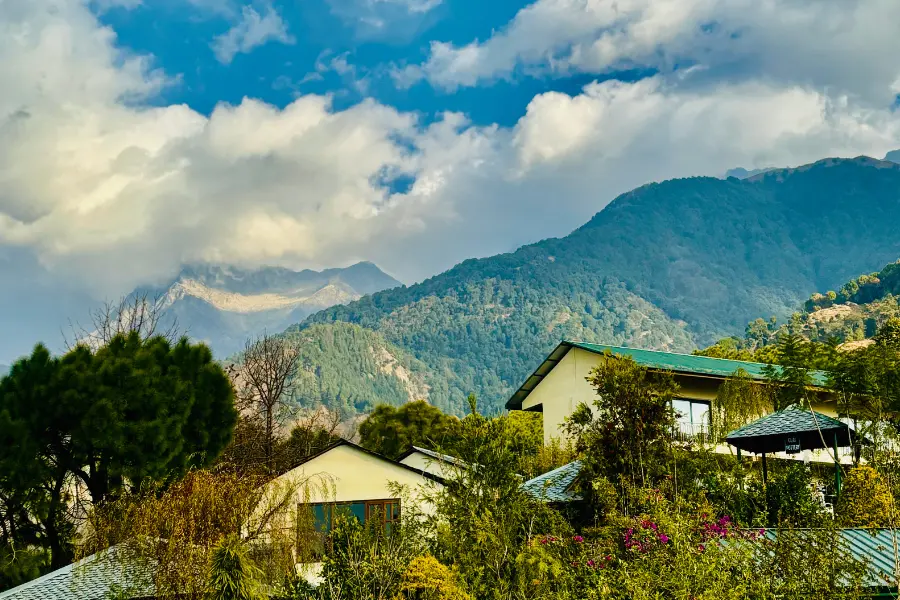
The Kangra Valley, in which Palampur sits, is one of the few places in Himachal Pradesh where tea grows commercially – and the visual effect of this is unlike anywhere else in the hills. The rows of tea bushes running across the valley floor, bright and ordered against the backdrop of cedar and pine, give Palampur a distinctive quality that the snow-heavy landscapes of higher Himachal don’t have: a sense of the land being actively worked and lived in, not just passed through.
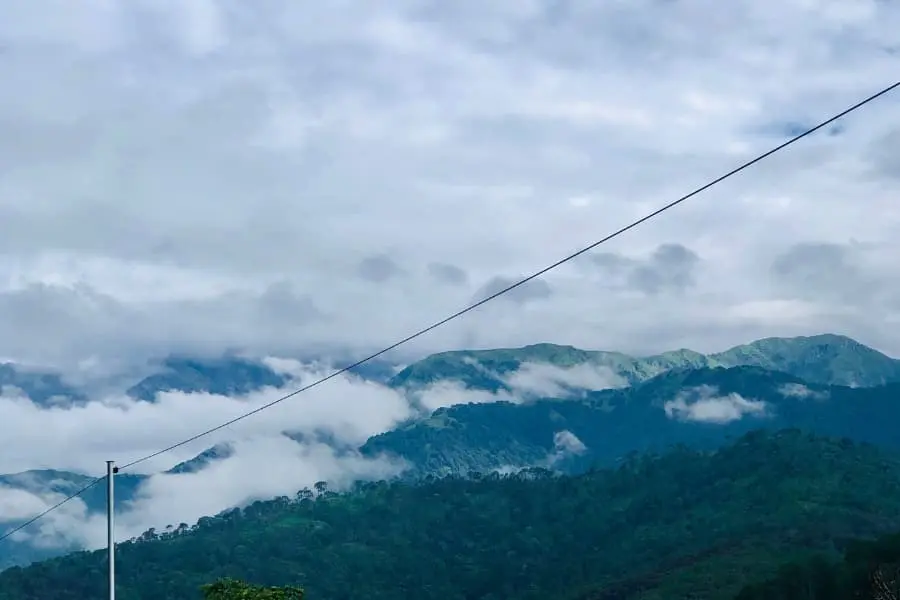
Above the valley, the Dhauladhar range rises steeply – one of the most dramatic near-sightlines in all of Himachal Pradesh. Unlike Shimla, where the mountains are present but distant, in Palampur they feel close enough to walk into, because in many directions, you actually can. The trails here don’t require permits, or a guide, or acclimatisation. They begin at the edge of the town and climb through pine forest into genuine mountain country within an hour.
The Right Kind of Quiet
Quiet in a hill station can mean two things. It can mean the off-season, when the crowds have thinned and the restaurants are half-empty and the town feels slightly abandoned. Or it can mean a place that has simply never become crowded in the first place – where the pace isn’t a seasonal variation but a structural quality of how the town exists.
Palampur is the second kind. The market is unhurried. The roads are driveable. The trails don’t require early morning starts to beat the queue. A stay here in peak season feels the way a stay in Manali felt fifteen years ago, before the infrastructure caught up with the reputation. That window doesn’t stay open indefinitely – the Kangra Valley is slowly finding its way onto more itineraries – but for now it’s still there, and it’s the specific quality that makes a resort in Palampur a genuinely different proposition than one in a more famous destination.
What a Palampur Stay Actually Gives You
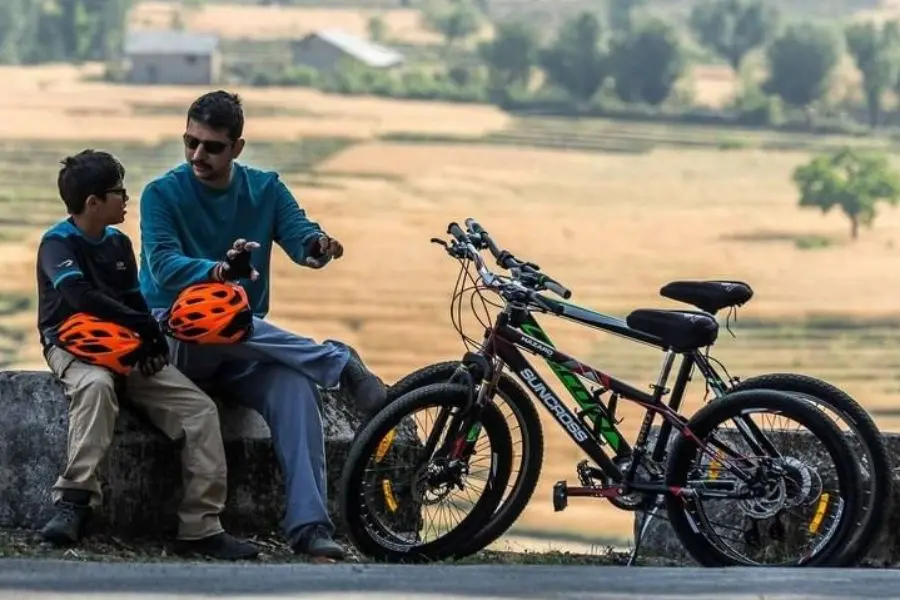
The practical case for a Palampur holiday is straightforward: it’s accessible from Delhi in under twelve hours by road or train to Pathankot and then an hour’s drive into the valley. It works in every season – the tea gardens are most vivid between March and June, the mountain clarity is best from October through December, the monsoon brings a lush intensity that the higher altitude destinations don’t sustain, and winter here is cold but never closed off in the way that higher passes force. There is no bad time to visit Palampur, only different versions of it.
But the less practical case is the more persuasive one. A resort in Palampur positioned well – on a hill, facing the Dhauladhar range, surrounded by land that hasn’t been commercially developed – gives guests something that few Himachal destinations still offer: the feeling of having arrived somewhere that isn’t performing for them. The valley goes about its day. The tea grows. The mountain sits. The guest is simply there, in it, which is a rarer experience than it sounds.
Palampur, and Where to Be Within It
Once the decision to visit Palampur is made, the question of where to stay matters more than it does in larger tourist towns. Because the destination hasn’t been built around visitors, the experience of a stay here is more directly shaped by the specific property than in a place like Shimla, where the town itself carries the guest along regardless of the hotel.
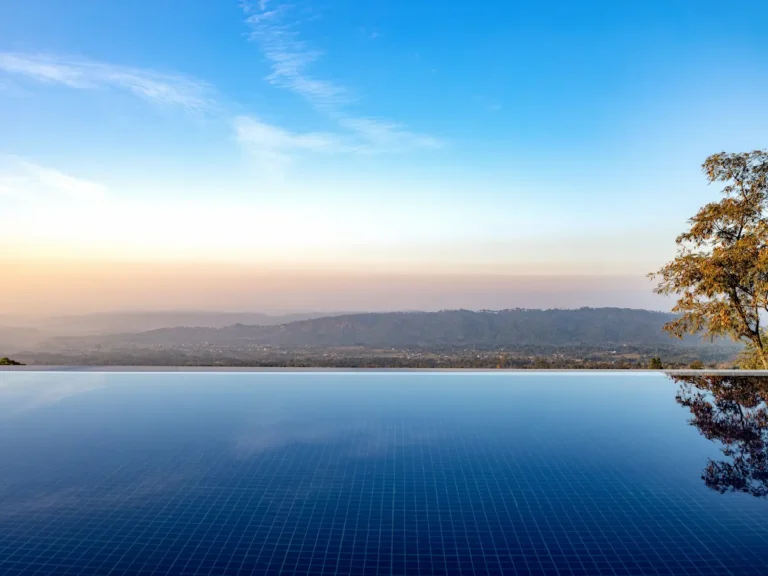
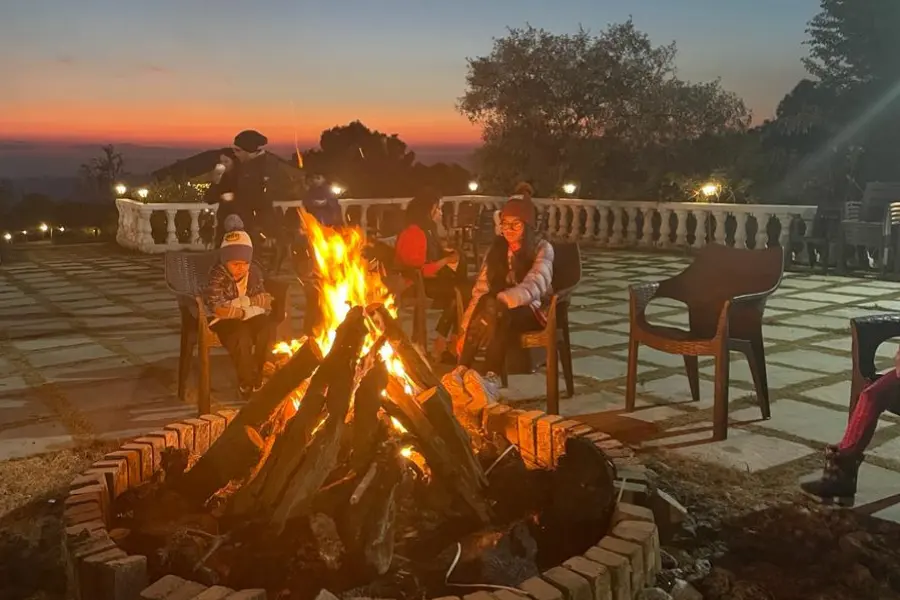
Rakkh sits on a hilltop above the Kangra Valley, which puts the Dhauladhar range at eye level rather than above it – a positioning detail that changes every sunrise and every evening sky. The trails from the property connect directly into the landscape rather than toward a road. The food is sourced from the land nearby. The pace is, as the resort itself puts it, one that asks nothing to be rushed. For a destination whose primary quality is unhurried, that alignment between place and property is the final argument for choosing Palampur – and for staying at Rakkh within it.
Palampur is waiting, quietly, and Rakkh is the right way to arrive at it. Explore your stay at https://rakkh.com/